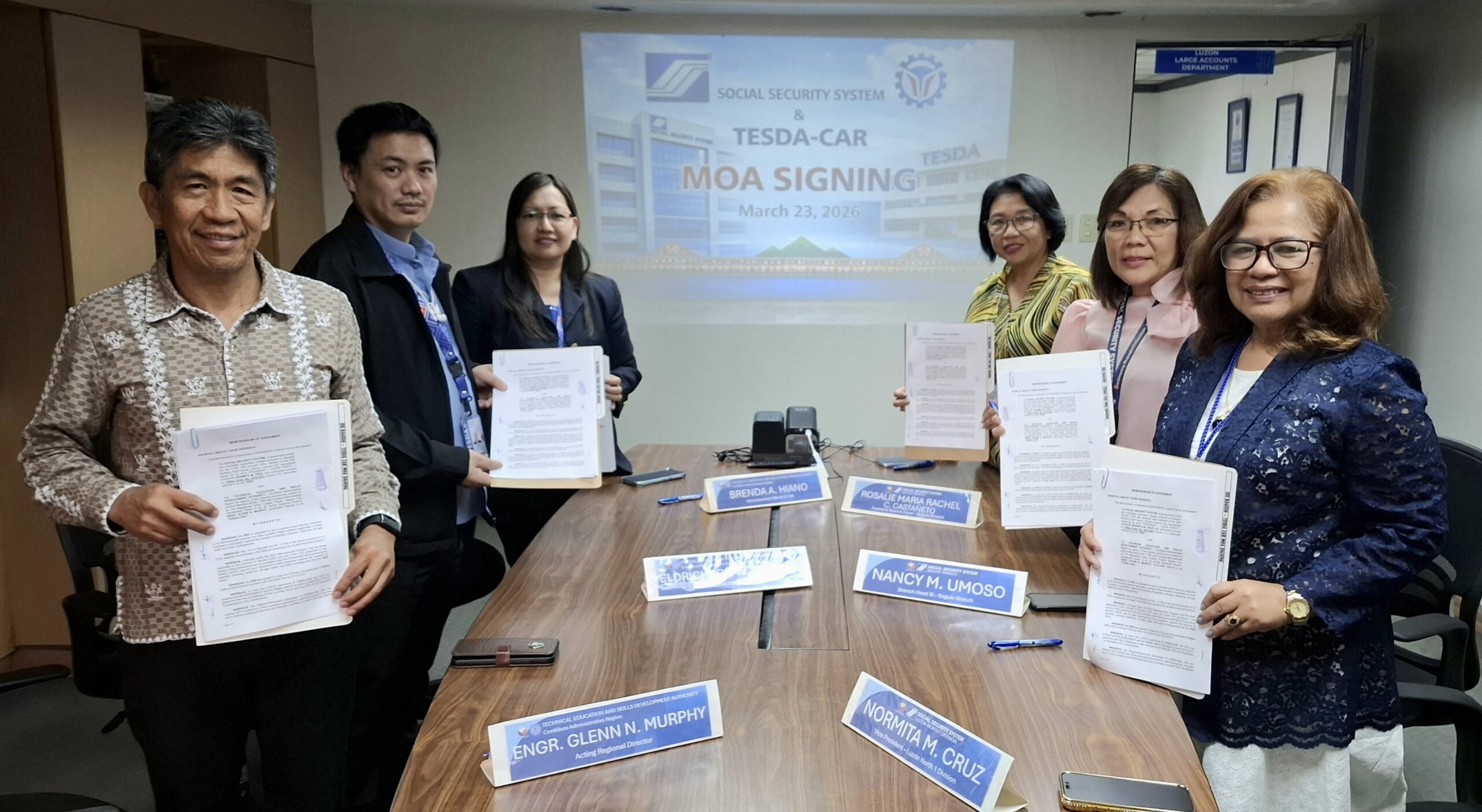
BAGUIO CITY, March 24, 2026 — The Social Security System (SSS) and Technical Education and Skills Development Authority–Cordillera Administrative Region (TESDA-CAR) have formalized a partnership to expand social security coverage for job order (JO) and contract of service (COS) workers through an automated contribution scheme.
The agreement, signed Monday under the KaSSSanga Collect Program (KCP), allows TESDA-CAR to facilitate the collection and remittance of SSS contributions via automatic salary deductions for at least 60 JO and COS personnel in the region.
JO and COS workers are not covered by the Government Service Insurance System (GSIS), making SSS enrollment critical to ensuring their access to social protection benefits.
SSS said the initiative strengthens financial security among non-regular government workers, granting them eligibility for benefits such as sickness, maternity, disability, retirement, death and funeral assistance, as well as loan privileges.
Monthly contributions for self-employed members range from ₱760 to ₱5,280, depending on declared income, inclusive of Employees’ Compensation (EC) contributions.
The EC program provides additional protection in cases of work-related illness, injury or death.
During the signing, SSS also urged TESDA employees with prior private sector experience to continue paying SSS contributions alongside GSIS coverage, allowing them to qualify for dual pensions upon retirement.
Officials said the partnership marks a step toward broader inclusion of underserved workers in the country’s social security system.